Build a prototype when you need to know if people understand and want what you’re proposing. Build an MVP when you need to know if they’ll actually use it, come back to it, or pay for it. The two tools
answer different questions, and picking the wrong one wastes months. If your hypothesis is about comprehension or design direction, start cheap and disposable. If it’s about real behavior, you need something people can actually operate.
TL;DR:
- Prototypes are best suited for testing understanding, concept direction, and usability, typically in quick, low-fidelity formats like sketches or wireframes.
- MVPs are complete, operational products aimed at real users, with metrics like activation, retention, and payments proving actual behavioral engagement.
- The choice depends on whether the hypothesis is about technical feasibility or real-world behavior; prototypes for comprehension and MVPs for usage validation.
- Modern tools and AI-assisted prototyping can accelerate the creation of high-fidelity prototypes, but they still fake backend logic and require clear labeling.
- Teams should test their core assumptions with the simplest relevant artifact, avoiding overbuilding an MVP when a prototype suffices for learning.
Table of Contents
- Key differences at a glance
- What is a prototype: types, fidelity, and what you actually learn
- What is an MVP: formats, necessary qualities, and the metrics that matter
- When to choose a prototype vs an MVP: an action checklist
- Tools and methods that change the trade-offs
- Common pitfalls and red flags
- Practitioner perspective: separating discovery from delivery
- One step to take this week
- Moving a validated prototype into a real MVP
- Sources
- FAQ
Key differences at a glance
Before you commit budget or engineering hours, it helps to see the two side by side. Prototypes and MVPs solve different problems, and confusing them is where most early-stage teams lose time.
- Audience and goal: Prototypes usually go in front of a handful of internal testers or recruited participants; MVPs go to real early adopters who might become paying customers.
- Fidelity and durability: A prototype is disposable and often fake under the hood. An MVP has to be maintainable enough to survive contact with actual users.
- Type of evidence: A prototype generates qualitative feedback about comprehension and usability. An MVP generates behavioral data, according to NN/g’s guidance on MVPs, which distinguishes prototype research questions from the behavioral evidence live code produces.
- Operational needs: Prototypes need none. MVPs need basic telemetry and someone watching for things breaking.
- Example: A clickable Figma flow tells you whether users understand a new checkout step. A live MVP tells you whether they’ll actually finish that checkout and come back next week.
Once you know which axis matters for your current question, the choice between the two gets a lot less abstract.
What is a prototype: types, fidelity, and what you actually learn
A prototype is a learning artifact, not a shrunk-down product. Its entire job is to test whether people understand and value what you’re proposing, according to NN/g’s research on prototype fidelity, which separates prototypes as comprehension tools from MVPs as behavioral experiments.
Prototypes come in a range of formats, and the right one depends on what risk you’re trying to retire:
- Paper sketches: Fast, cheap, best for testing concept direction before anything is built.
- Low-fi wireframes: Good for information architecture and flow logic without visual distraction.
- Clickable digital prototypes: Useful for testing navigation, task completion, and first impressions.
- Live-data prototypes: Pull in real or real-looking data to test whether a concept holds up under actual conditions.
Fidelity isn’t one dial. Visual fidelity, behavioral fidelity (does it respond like the real thing), and data fidelity (is the content real or placeholder) can each move independently, and you should only push the dimension that matches your risk. Testing pricing comprehension doesn’t require pixel-perfect visuals.
On timeline, SVPG’s research on prototyping programs describes iterative prototype cycles running roughly three weeks to two months, producing a prototype rich enough to double as a living spec for engineering.
What a prototype actually validates: comprehension, perceived value, and whether people can complete key tasks. It does not validate retention, payment, or whether anyone will keep using the thing next month.
Pro Tip: Run one or two pilot sessions before your main round of usability testing. It catches confusing tasks early and saves you from a bad main study.
What is an MVP: formats, necessary qualities, and the metrics that matter
An MVP is not a thin slice of features. It’s an experimentable, operable product real people can use, return to, or pay for.
There are two common shapes. A prototype-MVP uses a convincing front end with manual or faked backend processes, often through a Wizard-of-Oz setup. A live-code MVP runs on real, working infrastructure end to end. Choose the prototype-MVP when the backend logic is expensive or unproven; choose live-code when the value depends on the system actually working at scale.
NN/g’s definition of a minimum viable product lays out the rule teams keep skipping: an MVP has to be valuable, usable, and feasible. Usability isn’t a nice-to-have here. If people can’t get through the core flow, your experiment ends up measuring your interface instead of your product idea.
Usability failures routinely masquerade as product failures, and separating the two is the entire point of the “usable” requirement in NN/g’s framework linked above.
Once usability is solid, the metrics that actually validate an MVP are behavioral:
- Activation: Did new users reach the core value moment?
- Retention: Do they come back without being pushed?
- Conversion or payment: Will they exchange money or a real commitment for this?
Even a scrappy MVP needs basic observability and a plan for what happens when something breaks, because “minimum” applies to features, not to operational discipline.
When to choose a prototype vs an MVP: an action checklist
The fastest way out of this decision is matching your hypothesis to the evidence it actually requires.
- Name the hypothesis. Are you testing comprehension, technical feasibility, or real-world behavior?
- If it’s feasibility, build a proof of concept or feasibility prototype that answers the technical question only.
- If it’s comprehension or perceived value, start with a prototype. You’ll get answers in weeks, not months.
- If it’s discovery, retention, or willingness to pay, you need a live-code MVP, because only real usage produces that evidence.
- Check your budget against the ask. Prototypes are cheap and fast; MVPs cost more because they carry real infrastructure and support obligations.
- Run the one-page test before building anything: Who’s the audience? What single metric proves success? What fidelity is just enough to get a real answer?
Skipping step one is the most common failure mode. Teams build a full MVP to answer a question a three-week prototype could have settled, or they ship a polished prototype and mistake positive reactions for proof that people will actually use the thing.
Tools and methods that change the trade-offs
AI-assisted prototyping tools and live-data prototyping platforms have quietly shifted the math. What used to require weeks of engineering to fake convincingly can now be assembled fast enough that higher-fidelity prototypes are within reach even for lean teams, a shift SVPG’s prototyping research attributes in part to newer generative tooling.
That doesn’t make prototype code production code. It still fakes the backend, skips error handling, and omits the operational plumbing real products need.

For validating complex backend or AI behavior without building it, NN/g’s Wizard-of-Oz method lets a human manually simulate the system’s responses so you can test demand before automating anything.
A few practical notes:
- Pilot your usability sessions before the real study; a single trial run catches confusing instructions.
- When a prototype looks polished, stakeholders start assuming it’s nearly shippable. Say plainly what’s faked.
- Wizard-of-Oz works best for complex logic, not simple CRUD flows.
Pro Tip: Label every faked element in a live-data prototype explicitly, in writing, so engineering doesn’t inherit assumptions nobody actually tested.
Common pitfalls and red flags
Most bad calls in this space come from the same handful of mistakes.
- Treating prototype code as a production starting point. It was built to answer a question, not to survive load or handle edge cases.
- Letting a clunky interface hide a good idea. Measure usability on its own before you draw conclusions about the concept.
- Trusting praise over behavior. Positive comments in a prototype session don’t predict whether people will actually use or pay for an MVP.
- Skipping the pilot run. A single untested session can sink an entire round of findings.
Practitioner perspective: separating discovery from delivery
Experienced teams treat prototypes as a “build to learn” phase and MVPs as “build to earn.” A good prototype becomes a living spec, with faked elements flagged so engineering knows exactly what still needs observability, security, and error handling before it earns real users.

One step to take this week
Pick one current assumption on your roadmap and ask whether you need comprehension evidence or behavioral evidence. Then build the smaller thing that actually answers it, not the bigger thing that feels more impressive.
— Chad
Moving a validated prototype into a real MVP
Once a prototype proves people understand and want what you’re building, the harder part starts: making it usable, observable, and safe to run in production. Resolving this gap is a common challenge for development teams.
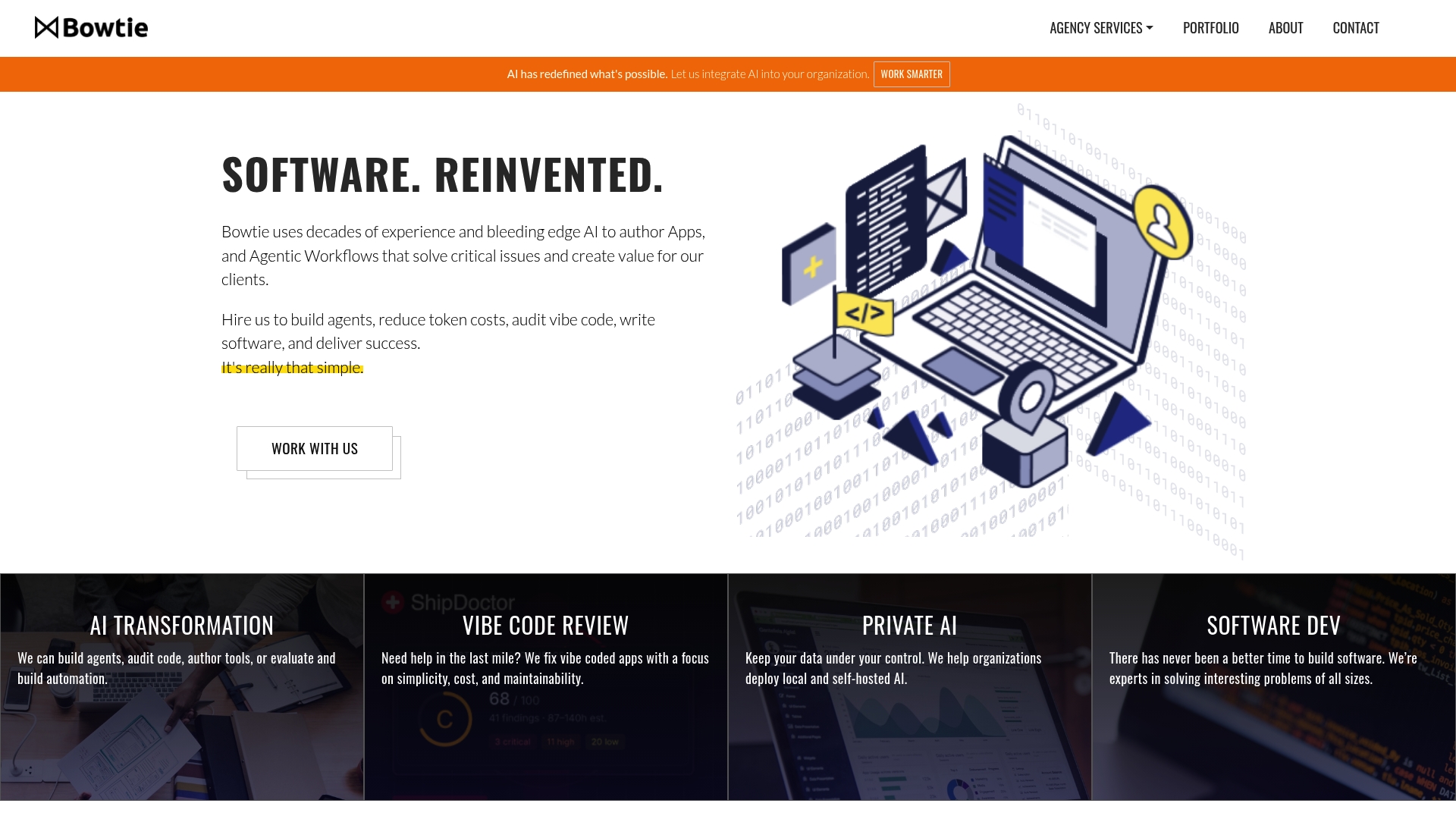
- New Product Development services for teams ready to move from a validated concept to a live-code MVP.
- AI Assisted Engineering for products where AI features need to work reliably.
- Code review services for teams unsure whether their AI-generated or prototype code is safe to build on.
- Ongoing production support services for support once your MVP is live.
If your prototype answered the comprehension question and you’re ready for the behavioral one, see our full services and pricing to find the right starting point.
Sources
FAQ
What is the main difference between a prototype and an MVP?
A prototype tests whether people understand and value an idea; an MVP tests whether they’ll actually use, return to, or pay for it, according to NN/g’s prototype fidelity research. One produces qualitative feedback, the other produces behavioral evidence.
Is a proof of concept the same as an MVP?
No. A proof of concept answers a narrow technical feasibility question, often before any user-facing design exists, while an MVP is a usable product people can actually operate. They answer different questions and usually happen at different stages.
How long does it take to build a prototype versus an MVP?
Iterative prototype programs can run roughly three weeks to two months, according to SVPG’s research on prototyping. A live-code MVP typically takes longer because it needs working infrastructure, not just a convincing front end.
What metrics show that an MVP is working?
Behavioral metrics like activation, retention, conversion, and payment are the real signals, not qualitative praise, per NN/g’s MVP guidance. Usability has to be solid first, or these metrics end up measuring your interface instead of your idea.
Can Bowtie help turn a prototype into a production-ready MVP?
Yes. Bowtie offers New Product Development and AI Assisted Engineering for teams moving from a validated prototype to a live-code MVP, along with a Vibe Check review for existing AI-generated code, with pricing listed on the Bowtie pricing page.